Nutrition - The Carb Challenge
24 Feb 2019In the previous post, we covered the basics about Nutrition.
Today we will dig deeper into Carbs, and particularly sugar.
Blood Sugar
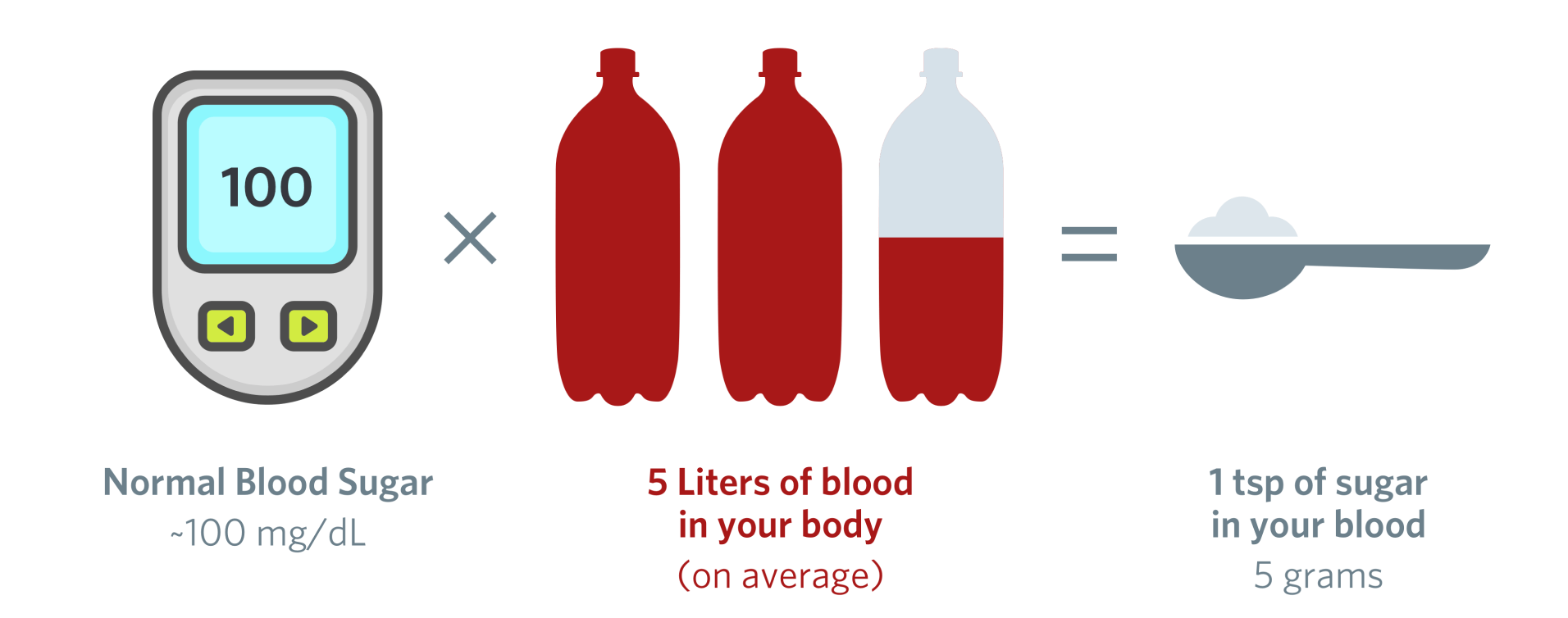
You must be aware of Blood Fasting Test. Normal non-diabetes Fasting blood sugar is 70-100mg/dl.
Let us use this range, and do some basic maths now.
- Blood Volume in Average Adult = 5L
- Blood Sugar Lower Range = 700mg / lt x 5L = 3500mg, or 3.5gm
- Blood Sugar Upper Range = 1000mg / lt x 5L = 5000mg, or 5gm
Human has average blood sugar of 3.5-5gm. That is ONE teaspoon of sugar. In the entire blood stream.
Anything more than this is toxic.
The Role of Insulin
Luckily, human body has evolved to handle such conditions.
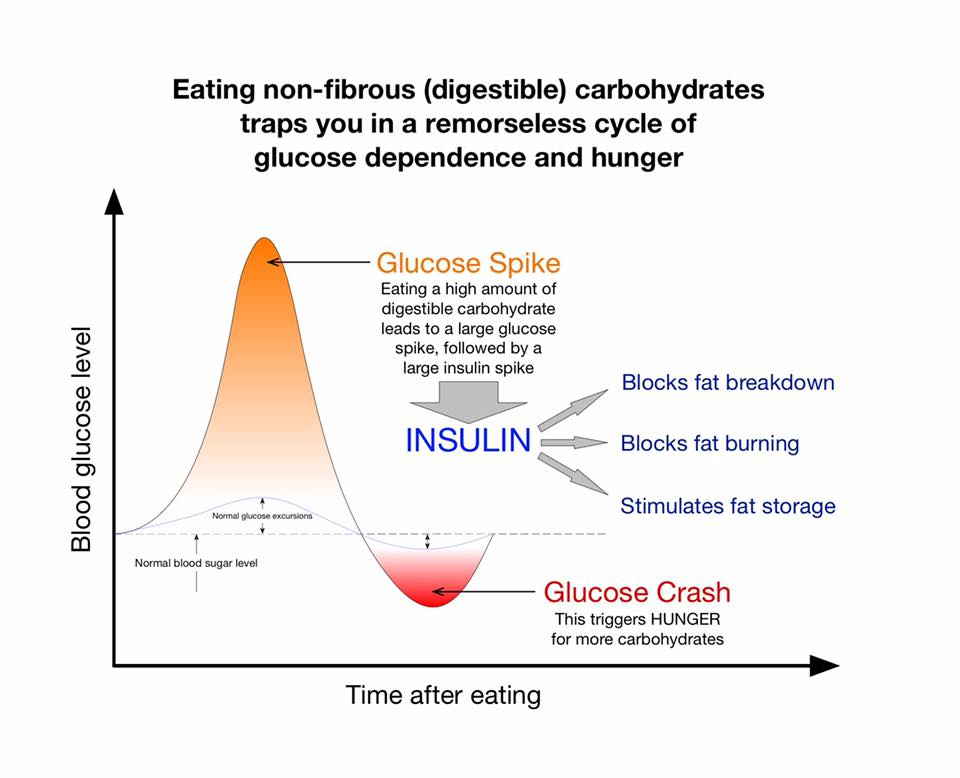
When we eat Sugar (in direct form or Simple Carbs), our body gets into action:
- Enzymes in the small intestine break it down into glucose.
- Our pancreas are closely monitoring blood sugar level. When it goes beyond the safe range, insulin is released to control it.
- Insulin can store the excess sugar in fat cells, for future usage.
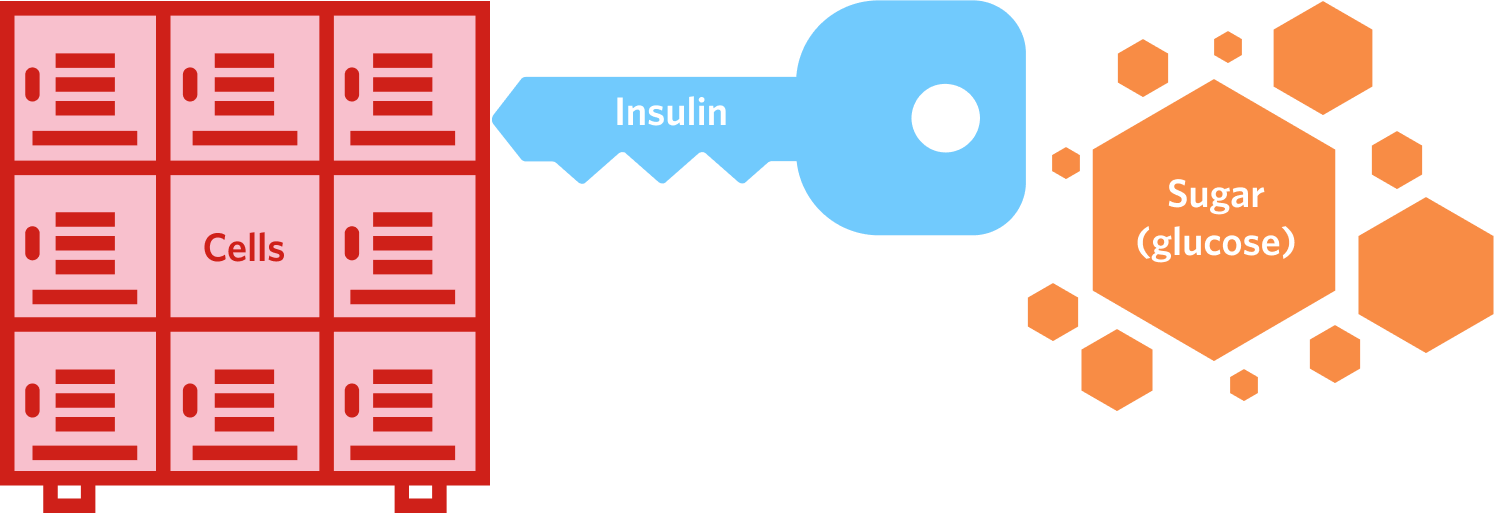
Insulin Resistance (IR): Over time, chronic daily insults and stress on the pancreas to produce insulin several times a day eventually insulin resistance will develop. Now when cells become insulin resistant metabolic syndrome of one sort or another begin to develop. This is the onset of diabetes.
Carboydrates == Sugar
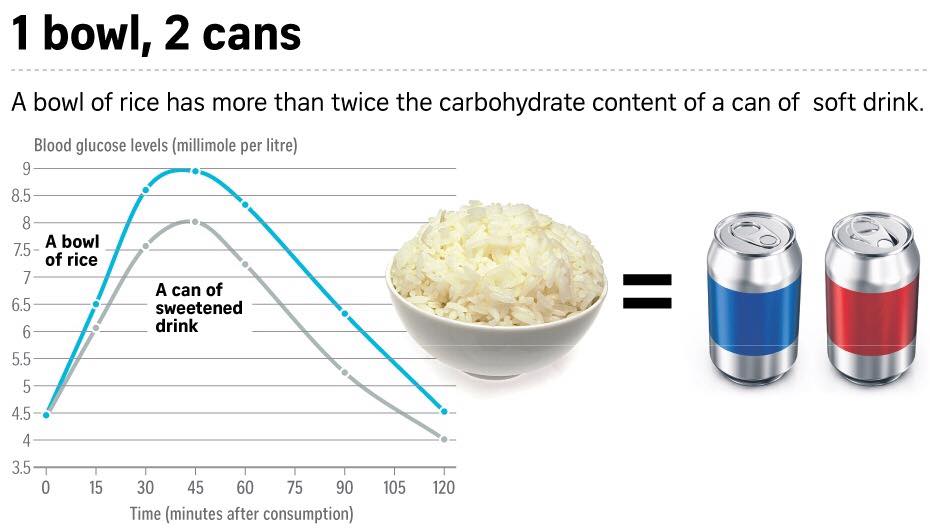
Most health conscious people know sugar is “BAD”. However, we do not realize easily digestible carbohydrates breakdown into SUGAR in your bloodstream!
This includes rice, whole-grains, potatoes, many fruits, some nuts, beans/legumes and other foods people commonly believe are healthy and should be eaten in abundance.
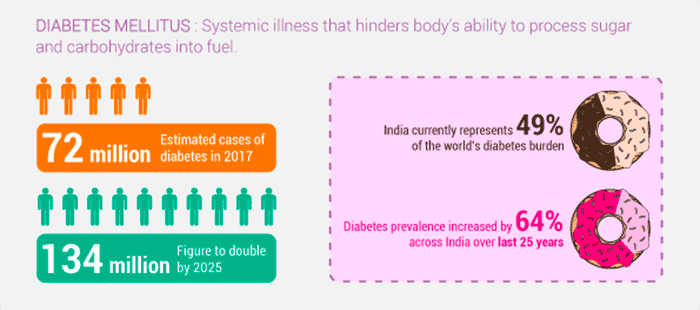
Diabetes has become a worldwide health crisis.
In next post, we will discuss on some steps we can take for better insulin management.